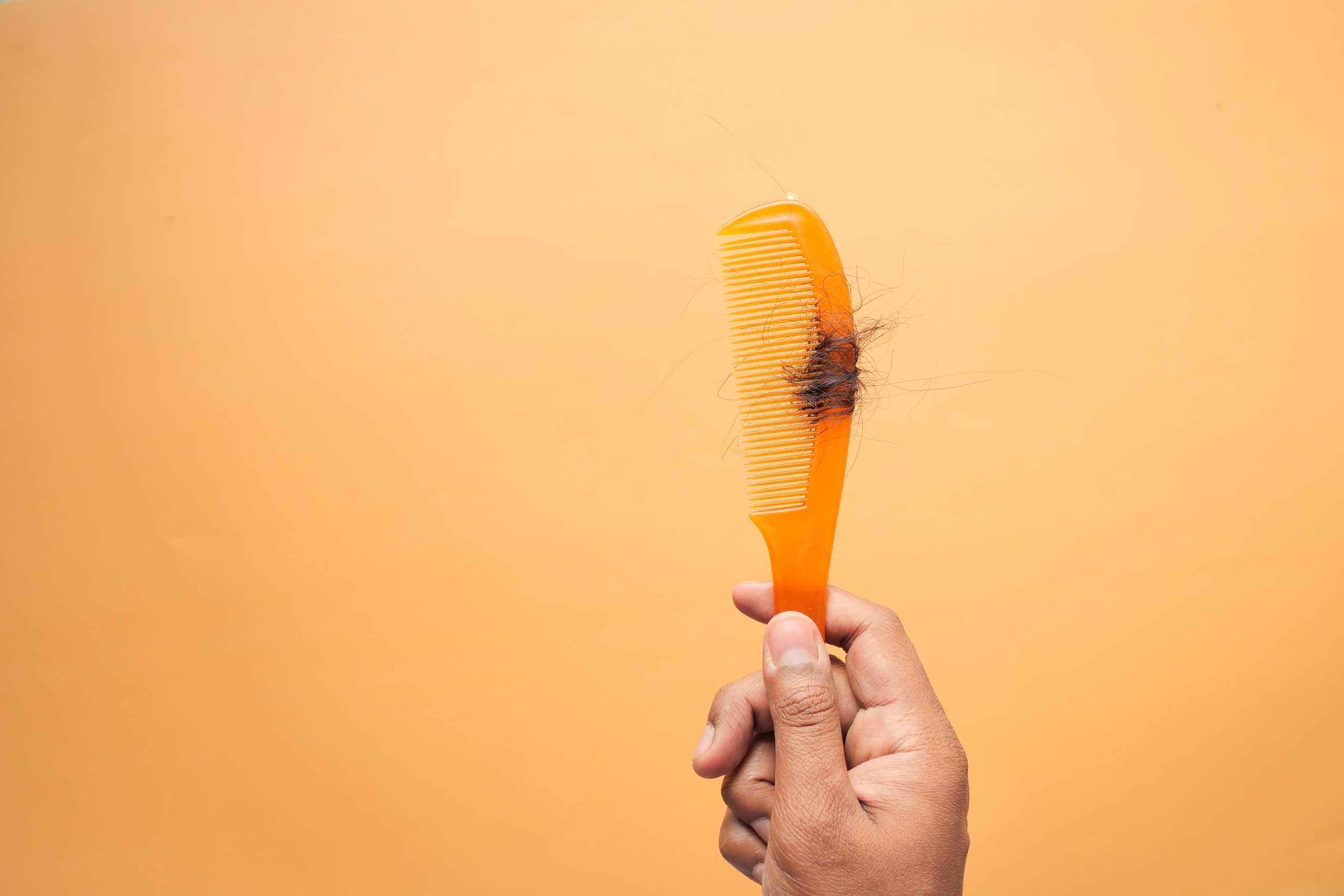
You get through the fever, the exhausting few months at work, or the diet that changed your body quickly. Then, weeks later, your shower drain starts collecting far more hair than usual. It is an unnerving sequence because the event feels finished by the time the shedding begins.
In many cases, this is telogen effluvium: a temporary, diffuse increase in shedding after the body has been pushed by physical or psychological stress. The important detail is the delay. Your hair is not necessarily reacting to what happened yesterday; it may be revealing the effect of an illness, nutritional shortfall, or major stressor from several months ago.

The short answer: the hair cycle is slow
Each scalp follicle moves through a repeating cycle. During anagen, the hair grows. During catagen, growth winds down. During telogen, the follicle rests before the old hair is released and replaced.
A healthy scalp normally has most follicles in the growing phase and a smaller proportion resting. The American Academy of Dermatology notes that losing roughly 50 to 100 hairs a day can be normal. After a significant shock, an unusually large group of growing hairs can switch into the resting phase at about the same time. The hairs do not all fall out immediately. They remain in place until the next part of the cycle, which is why the result is delayed.
The NIH-supported StatPearls review of telogen effluvium describes the resting interval as lasting roughly 1 to 6 months, with about 3 months being typical. When new growth begins, it pushes the older resting hairs out. That means the sudden increase in hair on your brush can be a sign that follicles are restarting, not proof that every affected follicle has stopped working.
What stress does to the follicle
“Stress” is too broad a word if it makes you imagine that every bad day causes visible hair loss. The more useful distinction is between ordinary daily tension and a substantial physiological or psychological burden that changes sleep, appetite, hormones, immune activity, or overall health.
Severe emotional strain may be involved, particularly when it persists. But high fever, a serious infection, surgery, major injury, childbirth, rapid weight loss, crash dieting, and inadequate protein intake are also recognized triggers. Often more than one factor is present: someone becomes ill, eats very little for two weeks, loses weight, and sleeps badly while recovering.
The biology is not completely settled at a molecular level. Current clinical explanations focus on a premature shift of many follicles from anagen into catagen and telogen, while research continues to examine inflammatory signals, oxidative stress, and the follicle’s local environment. That uncertainty matters: telogen effluvium is a useful clinical diagnosis, but it is not a complete explanation for every case of thinning hair.
Why illness can show up in your hair later

Fever and infection place demands on the body. So can an operation, blood loss, or a prolonged inflammatory illness. During that period, the body prioritizes essential functions. Hair production is not an emergency system, so some follicles may temporarily leave the growth phase.
This explains a common pattern: you recover, return to work, and assume the health crisis is behind you. Two or three months later, hair begins coming out in the shower. The timing makes people suspect a new shampoo or a recent haircut, when the more relevant clue may be a high fever or hospitalization earlier in the season.
Post-illness shedding is usually diffuse. You may notice a thinner ponytail, more scalp showing along the part, or extra strands on clothing and bedding rather than one sharply defined bald patch. The scalp generally does not scar, and short new hairs may eventually appear along the hairline.
Rapid weight loss is a double trigger

Rapid weight loss can affect the hair cycle in two related ways. First, a large change in body weight is a physiological stressor. Second, the eating pattern that produces the loss may provide too little energy, protein, iron, zinc, or other nutrients needed for normal hair production.
That does not mean intentional weight loss inevitably causes hair shedding. A gradual, nutritionally adequate plan is a different situation from severe calorie restriction, repeated fasting, or a diet that eliminates major food groups without replacing their nutrients. The DermNet clinical overview of telogen effluvium lists weight loss, unusual diets, nutritional deficiency, and endocrine disorders among possible triggers.
Weight-loss medication can complicate the picture because reduced appetite may make it harder to eat enough protein and micronutrients. Do not stop a prescribed medication because of shedding without speaking with the prescriber. The sensible question is not “Which miracle product will force my hair to grow?” but “Was the diet medically and nutritionally adequate, and is there another cause worth checking?”
What the timeline usually looks like
There is no exact calendar for an individual follicle, but the following pattern is a useful guide rather than a promise:
| Stage | What you may notice | Typical timing |
|---|---|---|
| Trigger | Fever, illness, surgery, sustained stress, rapid weight loss, or restricted intake | Day 0 |
| Delayed shedding | More hair on the brush, in the shower, or on the pillow; diffuse thinning | About 2 to 4 months later |
| Settling and regrowth | Shedding gradually eases; short new hairs may become visible | Often over 6 to 9 months, with cosmetic fullness taking longer |
These ranges come from the American Academy of Dermatology, DermNet, and the NIH-linked clinical review consulted for this article. They describe common courses, not a diagnostic test. Ongoing stress, a continuing dietary problem, thyroid disease, iron deficiency, medication effects, or a second form of hair loss can extend the process.
What helps, and what is mostly noise

The first job is to remove or treat the trigger. That might mean recovering fully from illness, addressing an overly restrictive diet, reviewing medication changes with a clinician, or getting help for persistent stress. Hair cannot be rushed much, but the conditions supporting normal growth can be improved.
- Eat regularly and include a reliable source of protein in meals, especially after rapid weight loss or poor appetite.
- Choose a varied diet with vegetables, fruit, legumes, whole grains, dairy or fortified alternatives, eggs, fish, meat, or other suitable protein sources.
- Avoid piling restrictive dieting on top of an episode of shedding. The goal is nutritional adequacy, not another aggressive correction.
- Handle hair gently. Normal washing does not cause telogen effluvium, but vigorous brushing, tight styles, and repeated chemical damage can add breakage to the problem.
- Do not take high-dose iron, vitamin A, zinc, or other supplements without a reason and professional guidance. Too much of some nutrients can be harmful, and a supplement cannot correct an undiagnosed thyroid or inflammatory disorder.
If your diet is limited or a clinician identifies a deficiency, a targeted hair supplement may be discussed as one part of a broader plan. It should not replace meals, testing, or treatment of the original trigger, and “natural” does not automatically mean appropriate for you.
My practical view is that the most useful intervention is often unglamorous: stop changing five things at once. Starting a new supplement, shampoo, restrictive diet, and intensive treatment on the same day makes it impossible to know what is happening and can add anxiety to an already slow process.
When shedding deserves a proper examination
See a doctor or dermatologist if shedding is severe, continues beyond about six months, keeps returning, or is accompanied by other symptoms. Evaluation is especially sensible if you have marked fatigue, cold intolerance, constipation, menstrual changes, unexplained weight change, scalp pain or scaling, or a history that suggests iron deficiency or thyroid disease.
Round or sharply defined bald patches, loss of eyebrows or eyelashes, broken hairs at different lengths, scarring, redness, or significant itching point away from straightforward telogen effluvium and deserve assessment sooner. Some people have telogen effluvium alongside hereditary pattern hair loss, so a temporary trigger can reveal a gradual condition that was already developing.
A clinician will usually start with the timeline, medical history, medications, diet, and scalp examination. Depending on the situation, blood tests may be used to investigate iron status, thyroid function, or other suspected problems. Do not diagnose yourself from the number of hairs in one shower; the pattern and the examination matter more than a single count.
The reassuring part, with one important qualification
Acute telogen effluvium is often self-limited, and the follicles are not typically destroyed. The frustrating part is that recovery is measured in months. Shedding may improve before the hair looks full again because new strands must grow long enough to contribute visible volume.
The qualification is just as important: “temporary” should not become an excuse to ignore persistent or patterned loss. If the trigger is ongoing, the shedding may continue. If the diagnosis is wrong, waiting indefinitely may delay treatment that could help.
Hair is a slow biological record of what the body has been through. When it starts shedding after stress, illness, or rapid weight loss, look backward before assuming the newest product is responsible, support recovery with adequate nutrition, and get an assessment when the pattern does not fit the usual course.
How this article was put together
This article was written for general readers trying to connect a recent health or weight change with delayed hair shedding. It was checked against patient guidance from the American Academy of Dermatology, the DermNet clinical reference, and the NIH-hosted StatPearls review, accessed in August 2026. Those sources broadly agree on the delayed 2-to-4-month pattern and the generally favorable course of acute telogen effluvium, but individual recovery varies. This is educational information, not a diagnosis or substitute for medical care.