
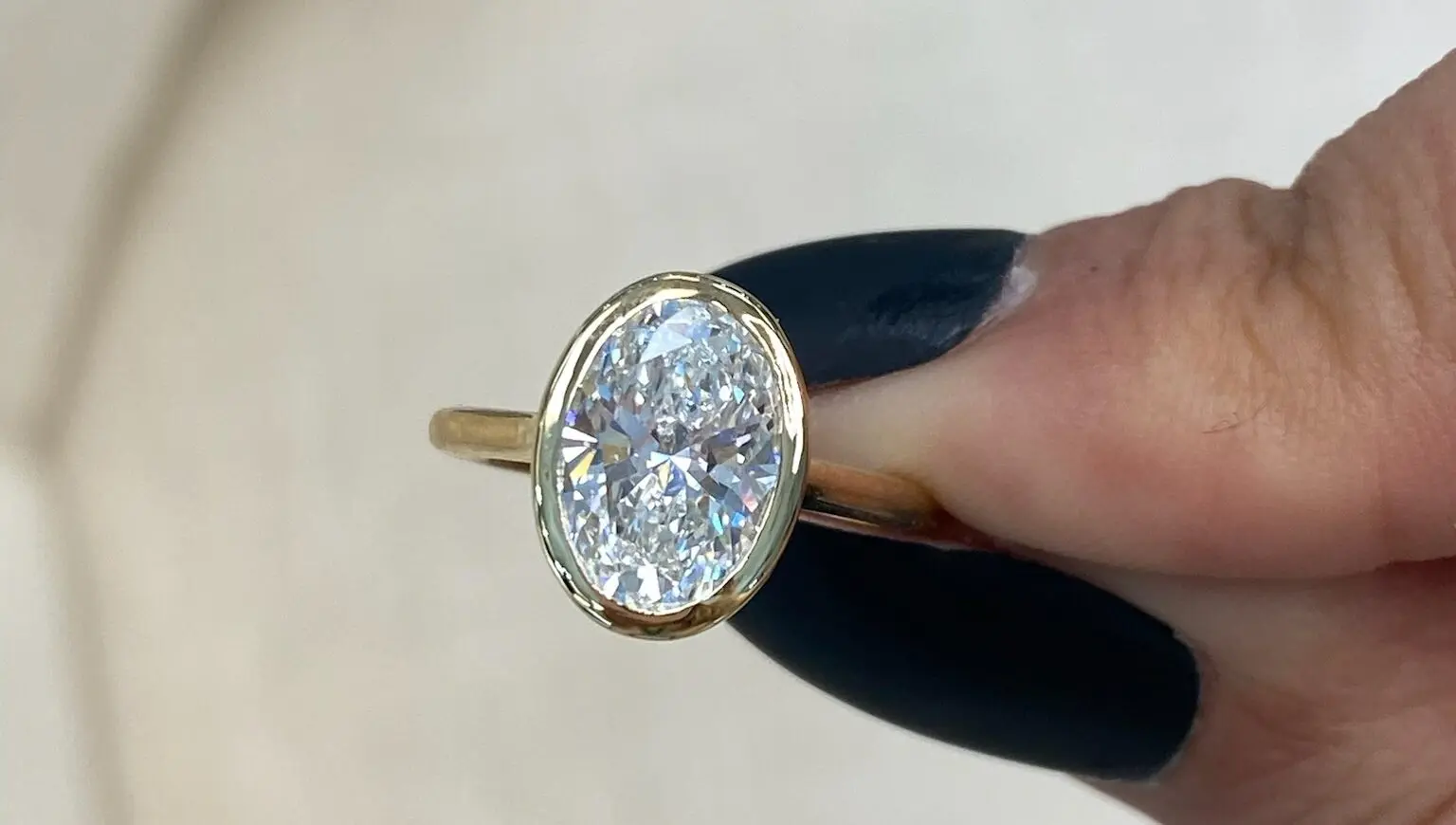
A bezel engagement ring is often recognized for its clean outline, but the simplicity of its appearance can be misleading.
Behind that smooth metal frame lies a high level of precision. In comparison to prong settings, where the diamond is held at specific points, a bezel-set engagement ring requires the metal to follow the exact contour of the diamond. Any imbalance becomes immediately visible.
This is why bezel settings are closely tied to craftsmanship. The design depends on accuracy, control, and a clear understanding of proportion.
Precision in Fit and Form
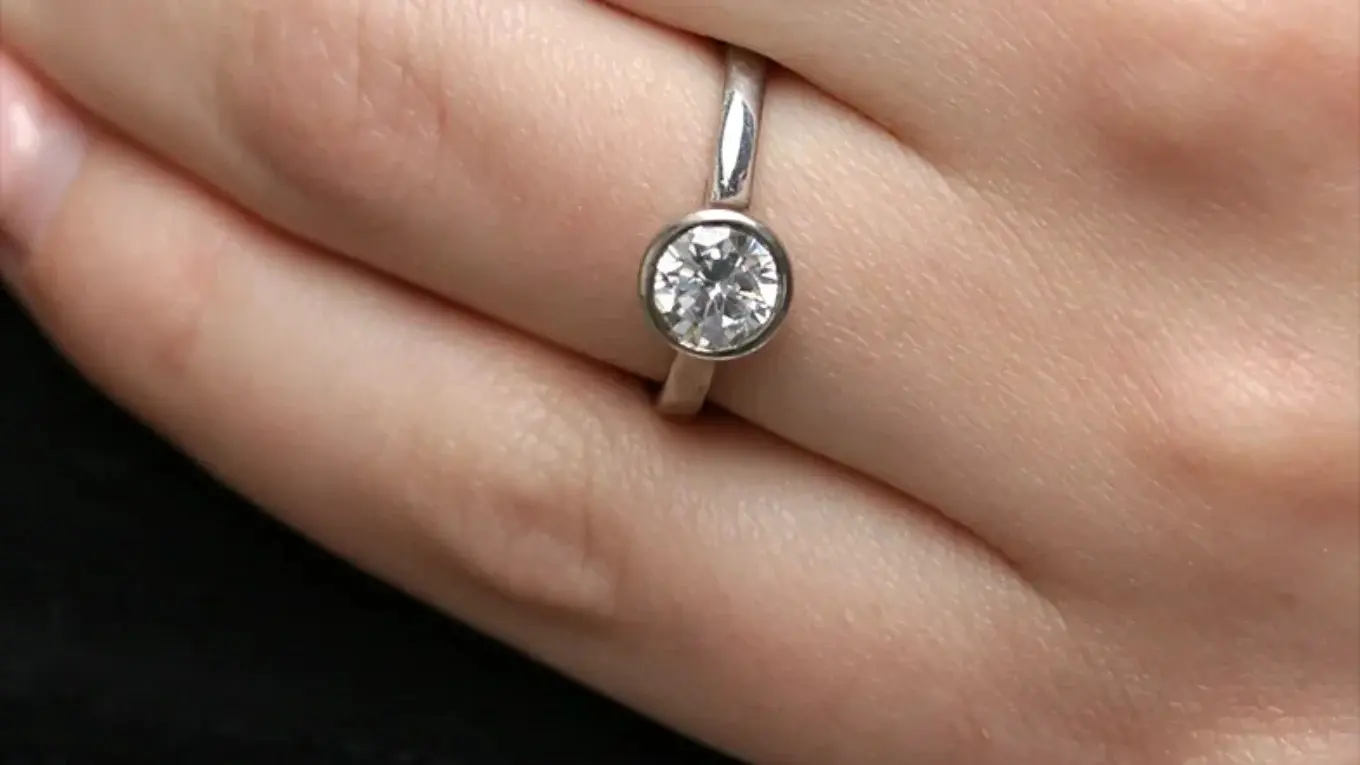
The defining feature of a bezel is how the metal surrounds the diamond. The rim must align perfectly with the shape of the diamond, whether round, oval, or emerald. Even a slight deviation can disrupt the symmetry of the ring.
This level of precision begins at the design stage. The setting is engineered around the exact measurements of the diamond, ensuring that the fit feels seamless.
Because the metal sits close to the diamond, the finish also matters. The edge must be smooth, consistent, and refined, without visible irregularities.
Balancing Structure and Comfort
A bezel engagement ring is not only about how it looks. It also changes how the ring feels when worn. Compared to higher-profile settings, bezel rings often ring sit lower on the finger. However, achieving this comfort requires careful balance.
The metal must be substantial enough to secure the diamond, yet not so heavy that it overwhelms the design. This balance is one of the more difficult aspects of crafting a bezel-set engagement ring.
In modern engagement rings, this combination of structure and wearability has made the bezel setting increasingly relevant.
Visual Definition Through Metalwork
The bezel creates a defined border around the diamond. This framing effect can subtly enhance the outline of the diamond, making its shape more distinct.
A round diamond appears more defined, while elongated shapes gain a sharper profile.
The choice of metal plays a role here as well. A high polish finish allows the bezel to blend with the diamond, while a contrasting metal tone can emphasize the outline.
Both approaches rely on controlled metalwork.
In well-executed diamond engagement rings, the bezel does not compete with the diamond. It supports it by reinforcing its shape and presence.
Consistency Across the Design
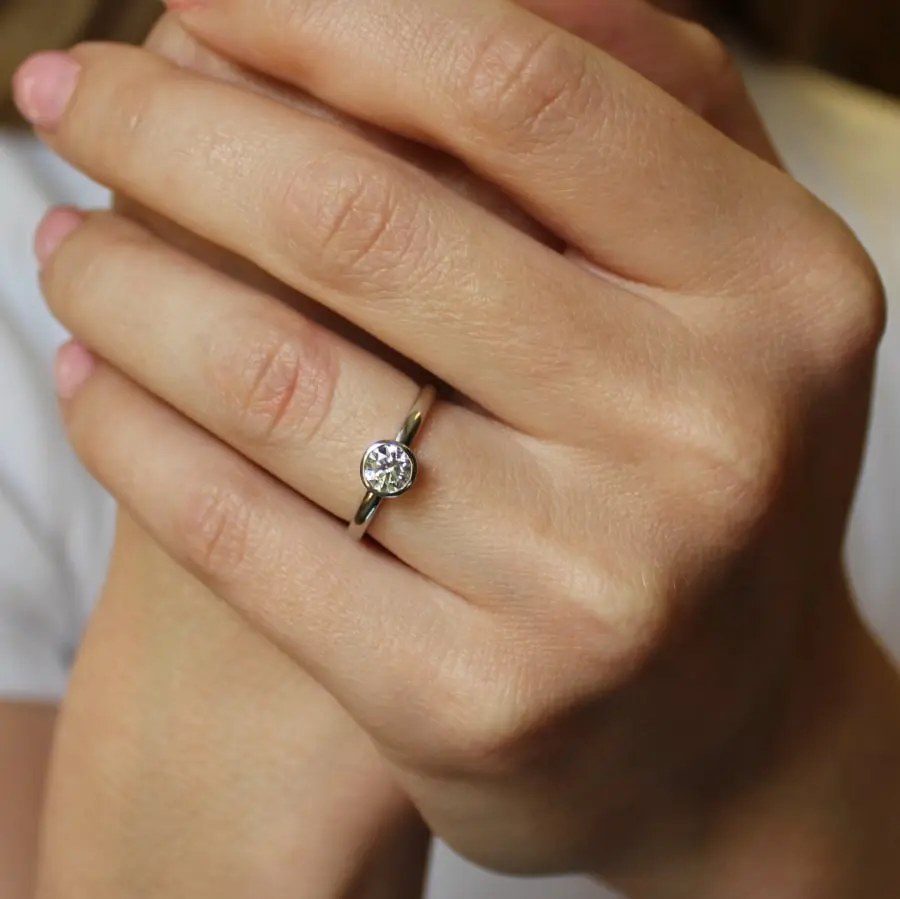
Craftsmanship in a bezel setting is not limited to the center. The band, the transition into the bezel, and the overall proportions must align. If the band feels disconnected from the setting, the design loses cohesion.
This is where disciplined design becomes important. Each component of the ring must relate to the others in scale and structure. The result is a ring that feels complete from every angle.
Within the broader category of engagement rings, bezel designs highlight how consistency contributes to the overall experience of the piece.
A Modern Interpretation Through Jean Dousset
For those exploring bezel settings within fine jewelry, brands that emphasize proportion and precision offer the most refined results. Jean Dousset approaches bezel designs with the same focus on structure and balance seen across its collections.
The Elle Bezel Solitaire Engagement Ring reflects this approach. Its high-polish bezel frames the center diamond with a smooth, continuous edge, creating a streamlined silhouette that feels both secure and composed.
The design maintains clarity in form while ensuring the diamond remains the focal point.
Across the Jean Dousset engagement rings collection, bezel settings are treated with this level of discipline. Each piece is constructed with attention to proportion, finish, and how the ring will be worn over time.
Craftsmanship That Defines the Setting
A bezel-set engagement ring is often chosen for its clean appearance, but what defines it is the craftsmanship behind that simplicity.
The accuracy of the fit, the quality of the metalwork, and the balance of the design all contribute to how the ring is experienced.
As modern engagement rings continue to evolve, bezel settings remain a clear example of how precision and intention shape fine jewelry.